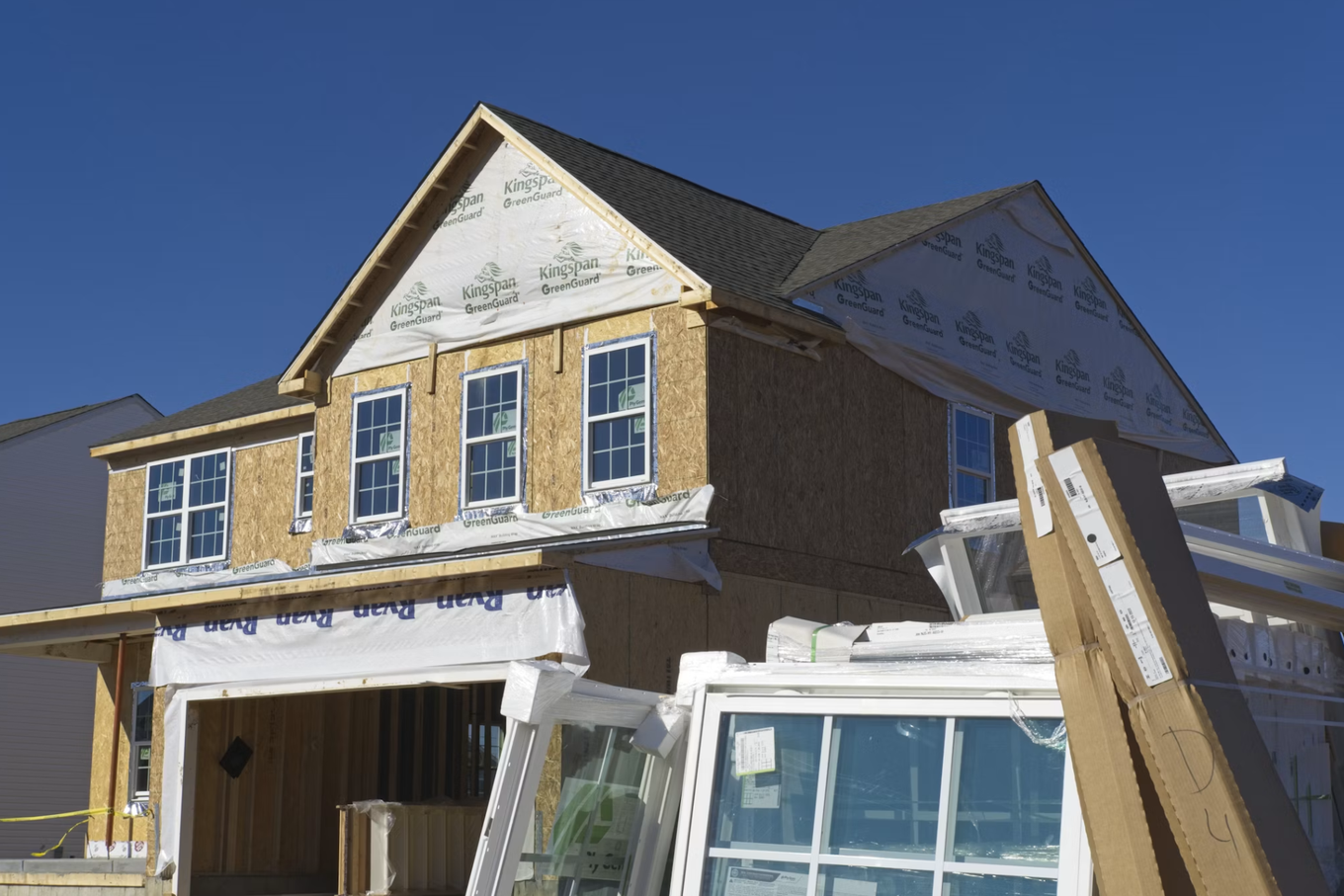
Confidence among American homebuilders fell again in July, dropping two points to 34 on the NAHB/Wells Fargo Housing Market Index (HMI), a closely watched monthly survey that scores builder perceptions of the new single-family home market on a scale from zero to 100. Any reading below 50 means more builders view conditions as poor than good. The index has not crossed that threshold in over two years.
According to the National Association of Home Builders (NAHB), sentiment has now remained below 40 for 15 consecutive months, the longest such stretch since 2012. The reading also came in below the analyst consensus forecast of 35, suggesting the market's troubles are proving more persistent than many observers expected.
A four-sided squeeze on builders and buyers alike
The NAHB points to four overlapping pressures holding back the market: elevated mortgage rates, costly land, rising material prices, and persistent skilled labour shortages. For international observers, the scale of the problem is striking. Research published in June by Harvard University's Joint Center for Housing Studies found that the number of homes affordable to households earning $75,000 or less has fallen by 60% since March 2019. With interest rates holding above 6%, monthly payments on a median-priced home now stand at roughly $3,100, up from $1,700 in early 2020. Households need an income exceeding $120,000 to manage that payment comfortably, compared to $66,000 just five years ago.
“"Many potential buyers remain on the sidelines as they wait for lower mortgage rates, more certainty on inflation and a clearer economic outlook." — Bill Owens, NAHB Chairman”
All three of the HMI's sub-indices declined in July. The measure of current sales conditions fell one point to 37, the gauge tracking sales expectations over the next six months dropped two points to 43, and traffic of prospective buyers, the most immediate signal of market appetite, slid two points to a weak 23. Regionally, the South and West continue to lag, with three-month moving averages of 33 and 26 respectively, while the Northeast and Midwest each held at 45.
Builders discount to compete, but buyers stay cautious
With demand soft, builders are reaching for incentives to shift inventory. The NAHB survey shows that 37% of builders cut prices in July, up from 35% in June and 32% in May, with an average reduction of 6%. Meanwhile, 63% of builders offered some form of sales incentive, the 16th consecutive month that share has hit 60% or higher. Those discounts are creating rare value in the new-construction market, but many prospective buyers remain unwilling or unable to commit while broader economic uncertainty persists.
One consequence of buyer paralysis is a shift toward renting. Harvard's researchers note that households unable to buy, or waiting for better conditions, are staying in rentals longer, sustaining multifamily demand even as single-family construction struggles. Single-family housing starts fell 7% over the past year, according to the same report, while overall construction starts slipped 1%.
“"With the HMI below 40 for 15 straight months, affordability remains the home building industry's primary challenge." — Robert Dietz, NAHB Chief Economist”
Federal legislation offers a long-term pathway, but no quick fix
The recently enacted 21st Century ROAD to Housing Act, a federal law targeting land-use rules, zoning reform, and construction financing, has been welcomed by industry groups as a step in the right direction. NAHB Chief Economist Robert Dietz described it as a positive move toward expanding supply and lowering costs, while also warning that meaningful improvements will require further action at the state and local level. With a nationwide shortage estimated at roughly 1.2 million housing units and wages consistently failing to keep pace with housing costs, the structural nature of America's affordability crisis is unlikely to resolve quickly, whatever the policy calendar brings.
This article is free to read. It always will be — no paywall, no account, no tracking.